2024
3D STRETCHING
EXERCISES
works
Autodesk Maya, After Effects, Premiere
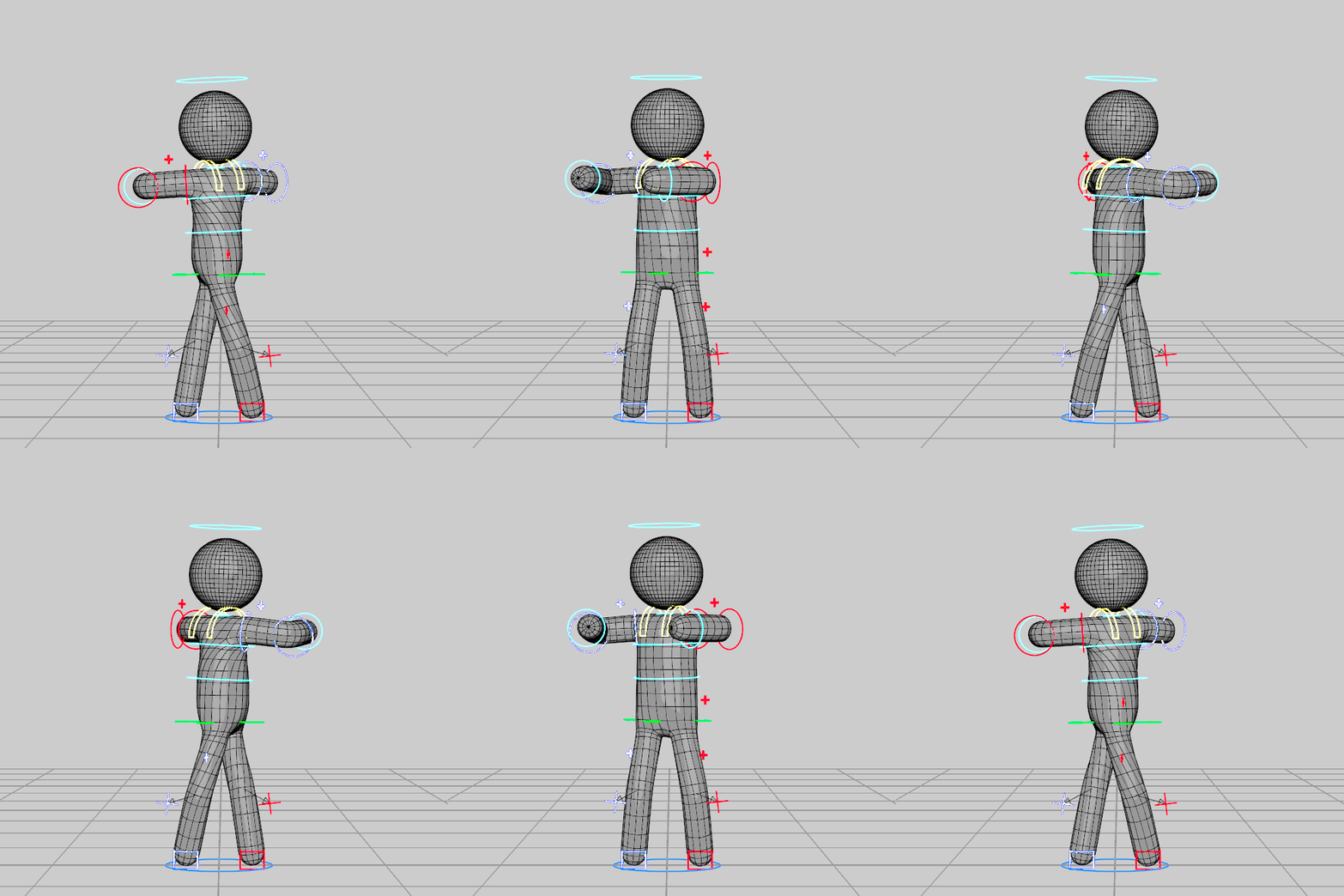
We started with the 3D model and skeleton.
Luckily, the character was anatomically simple, which allowed us to build a very efficient rig. Even without details like hands or feet, it still felt surprisingly believable in motion.
The rig used both FK (Forward Kinematics) and IK (Inverse Kinematics) systems, giving us more natural movement in the arms and legs.
One of the most useful features was the IK setup: moving the feet automatically affected the rest of the body, including the spine, creating smoother and more organic animations.


I’ve been collaborating with Kireén for over four years. It’s been an incredibly creative journey that has allowed me to explore a different approach to media, one that goes beyond the traditional communication style typically seen in the industry the company operates in (physiotherapy).
Our goal was to create content that offered genuine educational value to both the audience and future clients, giving them a meaningful reason to engage with the brand consistently.
At the same time, the brand identity needed to be seamlessly integrated into each video through a minimalist visual and narrative approach, ensuring clarity, consistency, and a cohesive voice across all content.
We chose stretching exercises as the way to inaugurate this new category of content.
Pretty much everyone I know suffers from back or neck pain, and these were videos were just ideal to connect with the most broad audience.
////////////
I started by sketching out a few ideas and revisiting different films for inspiration. One of the biggest creative influences came from The Hitchhiker's Guide to the Galaxy, particularly the animated sequences featuring absurd and hilarious designed infographics that are used to explain the wacky situations unfolding throughout the story.
That playful and informative style became a strong reference point for the project’s visual direction and tone. Highly recommended, by the way.
After several days of development and experimentation, I established a clear visual format and built a flexible, ready-to-use rig that allowed us to efficiently adapt the system to any content or idea we wanted to create.
Once the rig was finished, I moved on to implementing the skin.
This part was especially challenging, since the goal wasn’t realism, but a more cartoony and stylized muscle deformation system. After several tests, we found a good balance in how the skin stretched and reacted to movement.
You can clearly see the IK system in action here, the feet lock the entire body in place, making the movement feel much more natural and realistic with just a simple rotation.
Finally, I started exploring the visual style for the series and testing different approaches to find the right balance between simplicity and personality.
I wanted something minimalist, capable of expressing everything with just two or three colors while still feeling visually engaging.
That’s where toon shaders came in. Using a directional light and a few shader adjustments, I achieved the exact look I had envisioned.
I used a ramp shader to translate a wide range of color values into only two tones: light purple and dark purple, giving the scenes a cleaner and more graphic feel.
The same approach was applied to the floor to keep the entire scene visually consistent.
BEHIND THE SCENES
Once the visual look was defined, we rendered it and moved it into Adobe After Effects, where I enhanced the colors, added an interactive interface for each exercise, and included a few sound effects to glue everything together.